23 Aug 2026
Interconnecting Slot Volatility Data with Cumulative Rollover Targets in Cross-Border Gambling Operations

Video slot volatility indexes quantify payout frequency and size distributions, while cumulative bonus rollover thresholds track the total wagering volume required before players can access promotional winnings, and operators in interstate networks increasingly map these two metrics together to manage risk across jurisdictions. Research from state regulatory bodies shows that high-volatility slots, defined by larger but less frequent wins, often pair with elevated rollover thresholds to balance house exposure when promotions cross state lines. Data compiled by the New Jersey Division of Gaming Enforcement indicates that such alignments reduced bonus liability variances by measurable margins during the first half of 2026.
Defining Volatility Indexes and Their Role in Slot Performance
Volatility indexes for video slots typically range on standardized scales, where lower numbers signal steadier small payouts and higher numbers point to infrequent large returns, and these indexes derive from historical spin data aggregated across thousands of plays. Gaming analysts observe that networks spanning multiple states use these indexes to calibrate promotional offers, because a slot with a volatility rating above a certain level requires proportionally higher rollover amounts to offset potential jackpot clusters. Studies conducted by university research groups in the Midwest reveal consistent patterns where volatility above 8.5 correlates with rollover multipliers that increase by at least 15 percent in multi-state setups.
Mechanics of Cumulative Bonus Rollover Thresholds
Cumulative bonus rollover thresholds accumulate required wagers across all games rather than isolating them to individual titles, which allows players to progress toward clearance while operators monitor aggregate exposure. In interstate frameworks, these thresholds incorporate data feeds from each participating jurisdiction so that a single bonus issued in one state counts toward requirements tracked in others. Figures released by Canadian provincial regulators demonstrate that synchronized rollover systems lowered administrative disputes by integrating volatility-based adjustments directly into the calculation engines.
Linking the Two Metrics Across Interstate Networks
Operators connect volatility indexes to rollover thresholds through algorithmic models that adjust requirements in real time based on slot selection and player location, and this linkage prevents disproportionate bonus payouts when high-volatility games dominate activity. One study from an Australian research institution found that networks applying these connections experienced more stable promotional budgets, particularly when August 2026 regulatory filings required enhanced transparency on cross-border promotions. The integration relies on standardized data protocols that transmit volatility ratings alongside wager logs, enabling threshold updates without manual intervention.
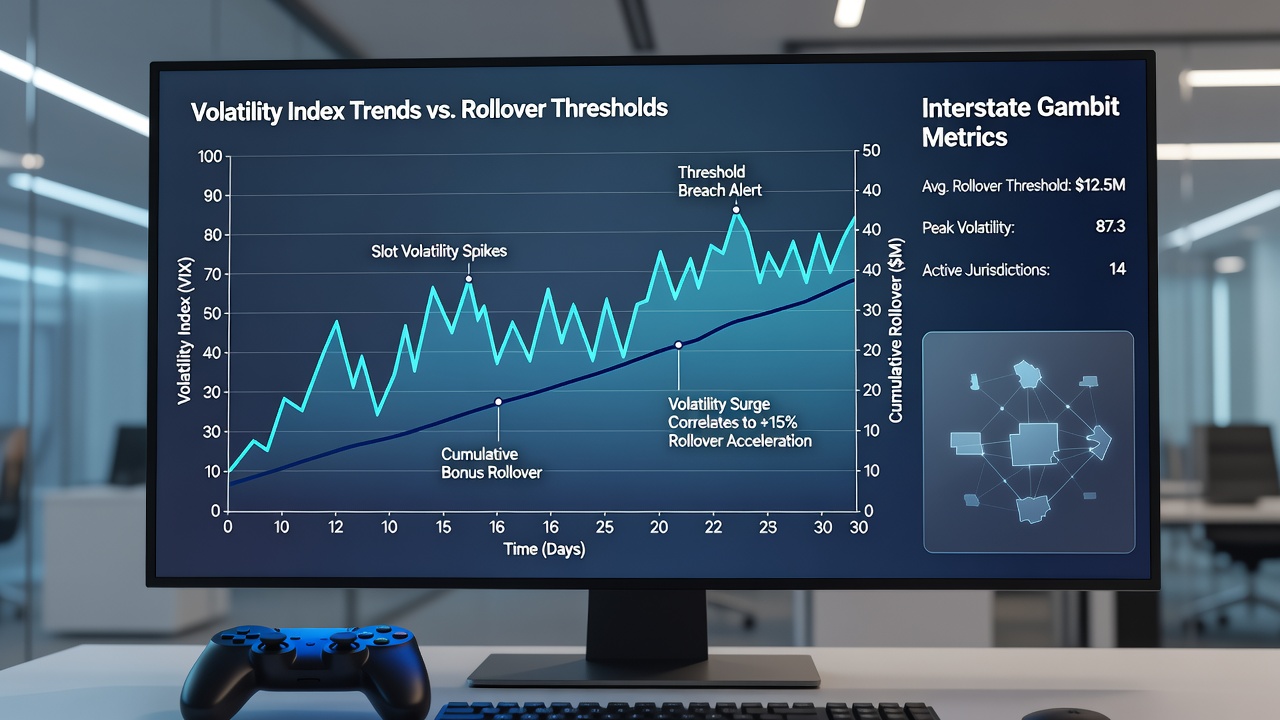
Practical implementations appear in platforms that serve players from several states simultaneously, where the system flags slots with volatility indexes exceeding predefined bands and raises the cumulative threshold accordingly. Observers note that this approach maintains compliance with varying state rules while preserving promotional appeal, because lower-volatility titles continue to carry standard rollover rates that encourage broader game exploration. Reports from European gaming associations highlight similar techniques applied in cross-border lotteries, offering templates that U.S. interstate networks have adapted.
Technical Implementation and Data Requirements
Technical setups involve centralized databases that store volatility indexes alongside historical payout distributions, then feed these values into rollover calculators shared across network members. Each transaction carries metadata that identifies the originating state and game volatility rating, allowing automated threshold scaling without violating individual jurisdiction caps. Industry reports indicate that platforms adopting this structure processed higher volumes of interstate play during the summer months of 2026 while maintaining consistent liability ratios.
Regulatory Considerations in August 2026
August 2026 brought updated filing requirements from several state commissions that explicitly reference volatility-adjusted rollover mechanisms, and these rules mandate disclosure of the formulas used to link the two metrics. Compliance teams now verify that threshold calculations reflect current volatility indexes downloaded from approved game certification labs. Data shared among regulators shows improved audit trails when networks document the exact points at which volatility triggers threshold changes.
Conclusion
Linking volatility indexes of video slots to cumulative bonus rollover thresholds creates a structured framework that interstate gambling networks rely on for balanced promotional management, and ongoing data exchanges between operators and regulators continue to refine these connections. The approach integrates technical metrics with operational controls to support compliant cross-state activity throughout 2026 and beyond.