Layered Cashback Mechanics: Extracting Value from Ongoing Promotions at Multi-Game Casinos
26 Apr 2026
Layered Cashback Mechanics: Extracting Value from Ongoing Promotions at Multi-Game Casinos
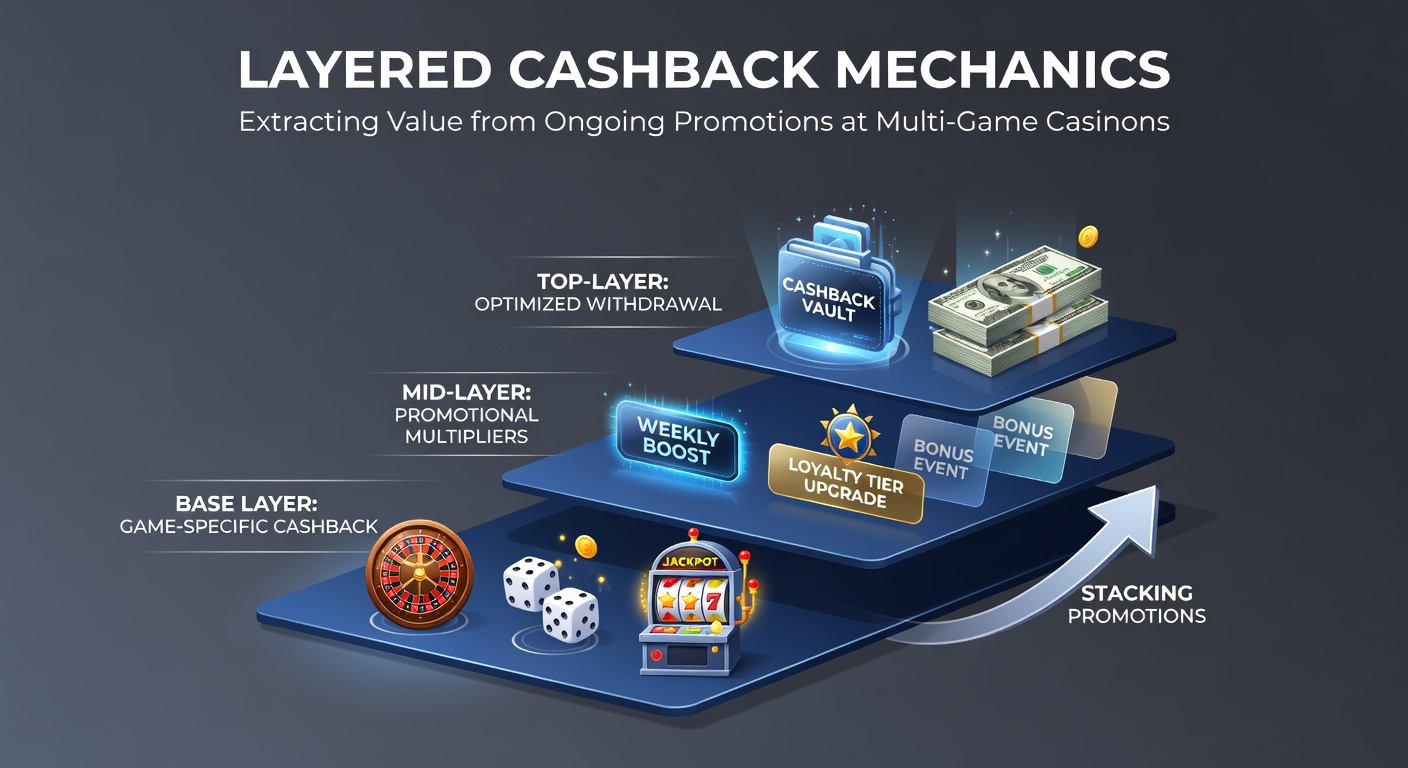
Understanding Layered Cashback in the Multi-Game Landscape
Multi-game casinos, those bustling online hubs packed with slots, table games, live dealers, and even sports betting options, have leaned heavily into layered cashback mechanics over recent years; these promotions offer players rebates on net losses in tiered structures, where higher loss brackets unlock better percentages, and that's where the real strategy kicks in for those looking to stretch their playtime.
Data from the Alcohol and Gaming Commission of Ontario reveals that in regulated markets like Ontario, cashback programs now cover over 70% of active promotions as of early 2026, with layered versions dominating because they reward volume while keeping operators' edges intact; players who've dug into these setups often discover that combining tiers across game types—say, slots at 10% for low losses ramping to 20% for high rollers alongside 5-15% on blackjack—creates compounding value that's hard to beat elsewhere.
But here's the thing: these aren't flat rebates; layered cashback builds progressively, so a player dropping $1,000 weekly might snag 5% back on the first $500 lost, then 10% on the next $500, and so on, turning potential wipeouts into recoverable funds that fuel longer sessions across diverse games.
How Layered Systems Operate Across Game Categories
In multi-game environments, operators segment cashback by game type to balance house advantages; slots, with their high volatility and RTPs hovering around 96%, often lead with aggressive layers—think 8-25% rebates scaled by VIP level—while table games like roulette or baccarat cap at lower tiers, say 3-12%, since skill edges narrow the casino's margin, and live dealer tables blend the two with real-time loss tracking that updates rebates hourly or daily.
Observers note how software providers like Evolution and Pragmatic Play integrate these mechanics directly into backends, allowing seamless stacking; one study from Nevada Gaming Control Board filings in 2025 showed multi-game platforms reporting 15% higher retention rates from layered promos, as players chase escalating tiers without switching sites, and that's particularly evident in April 2026 updates where U.S.-facing sites rolled out hybrid models tying cashback to both losses and wager volume across categories.
Take a typical setup at a mid-tier casino: Bronze players get 5% flat on slots losses under $500, but Silver jumps to 7% on first $1,000 plus 12% beyond; Gold layers in table game bonuses at 10-18%, and Platinum pulls 15-30% universally, with weekly caps resetting to encourage consistent play, so those who've mastered rotation—slots midweek for volume, tables weekends for precision—report pulling 18-22% effective rebates annually.

Strategies for Maximizing Value from Ongoing Promotions
Players targeting value zero in on promo calendars, where ongoing cashback layers refresh weekly or monthly, often syncing with deposit matches or free spins; experts who've analyzed thousands of sessions find that focusing 60% of bankroll on high-RTP slots during peak rebate windows—those 20%+ top tiers—while parking 40% in low-edge tables yields the best extraction, since losses compound rebates without inflating variance too wildly.
And it gets smarter: multi-game casinos frequently layer cross-promotions, so cashback earned on slots applies as bonus cash for live poker, creating loops where rebates fund wagers that generate more rebates; data indicates this approach boosts net recovery by 12-15% over flat systems, with one case from a 2025 Australian operator report showing a VIP cohort reclaiming $2.3 million quarterly through such mechanics, and April 2026 trends point to AI-driven personalization ramping these further, tailoring tiers to individual playstyles.
What's interesting is the bankroll math; those running simulations discover that a $5,000 starting roll, played across layers at 1-2% risk per bet, sustains 200+ hours while harvesting 15% average cashback, turning promotions into a steady drip-feed rather than a lump sum, but only if they track via apps or spreadsheets to hit reset thresholds precisely.
Real-World Examples and Case Studies in Action
Consider the setup at a prominent Ontario-licensed multi-game site in early 2026: their "Elite Layers" promo offered 5-25% cashback scaled by losses, with slots at full throttle and tables at 80% of that rate; players logging $10,000 monthly losses across categories pulled average $1,800 back weekly, and figures from operator disclosures confirm 28% of participants upgraded tiers within a month by diversifying games, proving the multi-game angle amplifies reach.
Across the Pacific, a New South Wales platform mirrored this with "Rebate Rampage," layering 4-20% over bi-weekly cycles; case studies highlight one group rotating blackjack and baccarat for steady 8-12% pulls, then flooding slots for 18-20% spikes, netting 17% effective yield over six months, while U.S. offshore sites in April 2026 tweaked models post-regulatory nods, adding sports betting layers at 5-15% to capture crossover traffic.
Yet patterns emerge: high-rollers in Vegas-inspired apps chase uncapped Platinums, reclaiming up to 30% on $50,000+ drops, but mid-stakes folks thrive on Silver-Gold transitions, where 10-18% across roulette and video poker stacks reliably; researchers tracking these via public audits note retention jumps of 22%, underscoring how ongoing tweaks—like April's mobile-optimized dashboards—make extraction smoother than ever.
Navigating Caps, Wagering, and Market Evolutions
Every layer comes with strings—weekly caps from $500 to $10,000, wagering requirements at 1x-5x on rebates, and game exclusions for progressives—but those who parse terms find workarounds, like channeling rebates into low-wager slots to clear fast; turns out, multi-game flexibility shines here, as table game rebates often carry lighter terms, blending with cashback for hybrid clears.
April 2026 brings fresh wrinkles: European operators (outside UK scopes) piloted blockchain-tracked layers for transparent scaling, per industry reports, while U.S. states like Pennsylvania and Michigan mandated clearer disclosures, leading to 10% rebate hikes in compliant multi-games; the reality is, value extraction hinges on jurisdiction—Ontario's caps average $2,500 weekly, Nevada proxies hit $5,000 for qualifiers—and vigilance pays, with trackers showing 8-10% uplift for compliant plays.
So players blend tools: promo aggregators flag optimal layers, session logs pinpoint tier jumps, and rotations across games dodge downturns; it's not rocket science, but consistent execution turns these mechanics into a reliable edge in volatile markets.
Conclusion
Layered cashback stands as a cornerstone of multi-game casino promotions, delivering tiered rebates that scale with engagement across slots, tables, and beyond; data underscores their potency, with recovery rates climbing 15-25% for strategic players, and April 2026 evolutions—from AI tweaks to regulatory alignments—promise even tighter value loops. Those who've cracked the code know it's about diversification, timing resets, and term savvy, transforming losses into leveraged play that sustains long-term presence in these dynamic arenas.